IDP vs Agentic AI for Document Processing
Agentic AI handles workflow judgment, but only if extraction quality beneath it stays rigorous.
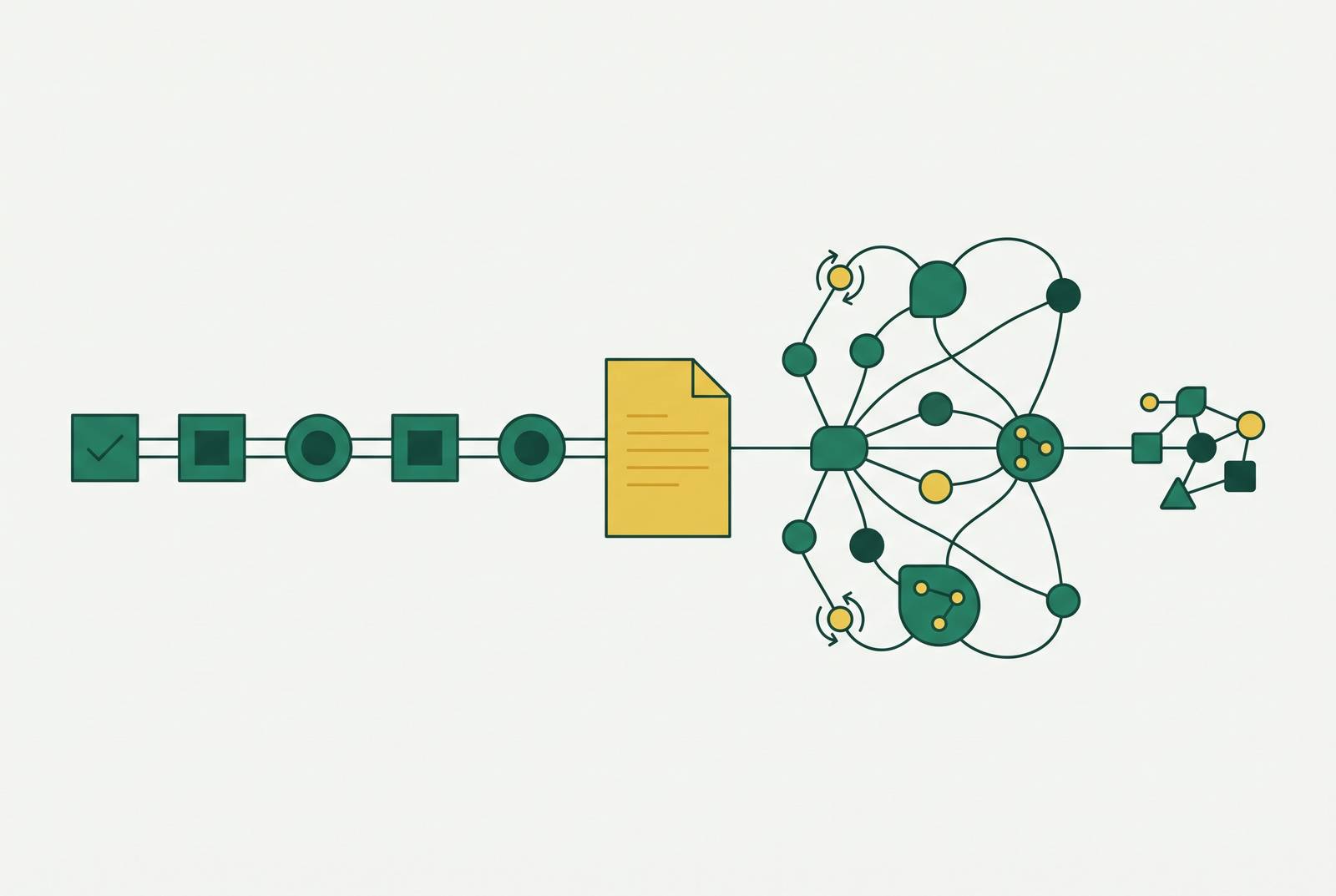
The same product gets sold three different ways depending on who's pitching it: OCR to one buyer, IDP to another, "agentic AI for documents" to a third. Underneath, it's often the same extraction engine wearing a different label, and that labeling problem, where one product is sold as OCR, IDP, or agentic AI depending on the buyer, pushes buyers toward a false choice. They end up picking between technologies that don't actually compete, because they sit at different layers of the same stack. What matters is where each layer starts and stops. It's where each layer starts, where it stops, and what it needs from the layer next to it to function. LLMs and agent frameworks haven't removed the need for document processing. They've raised the bar for it.
What IDP does, and where its boundaries are
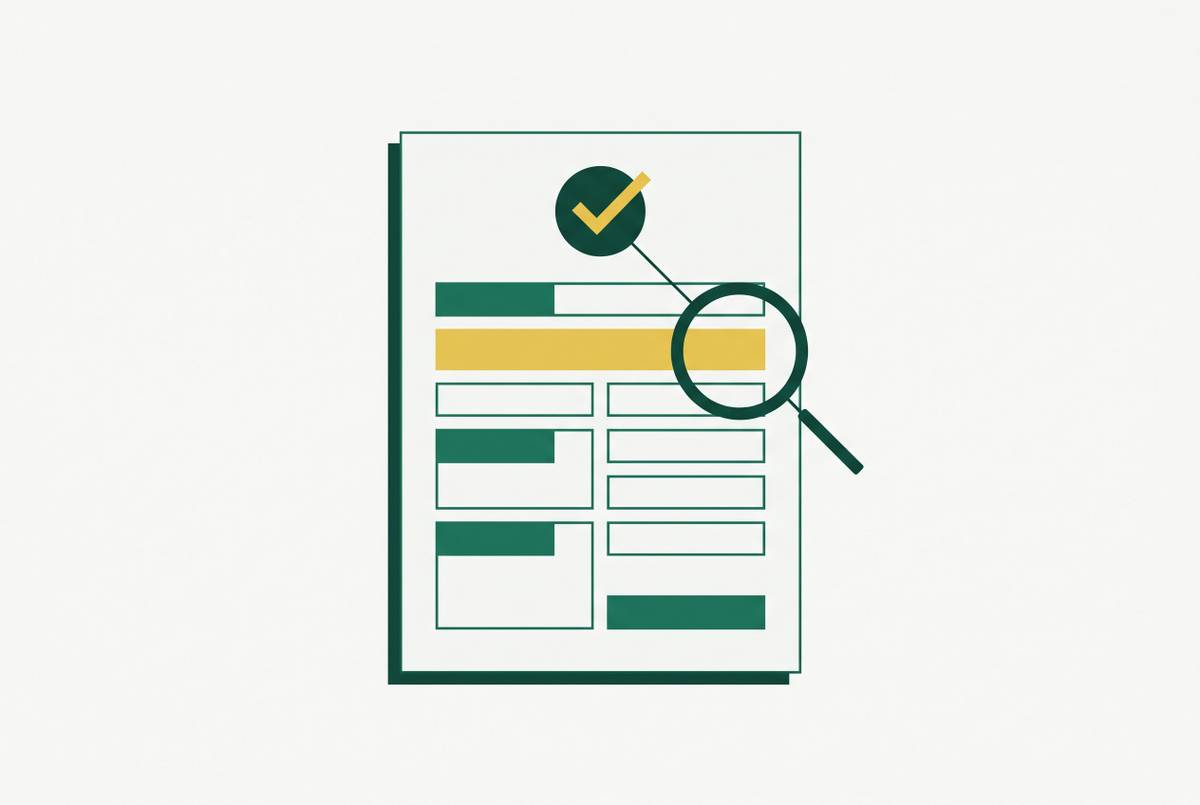
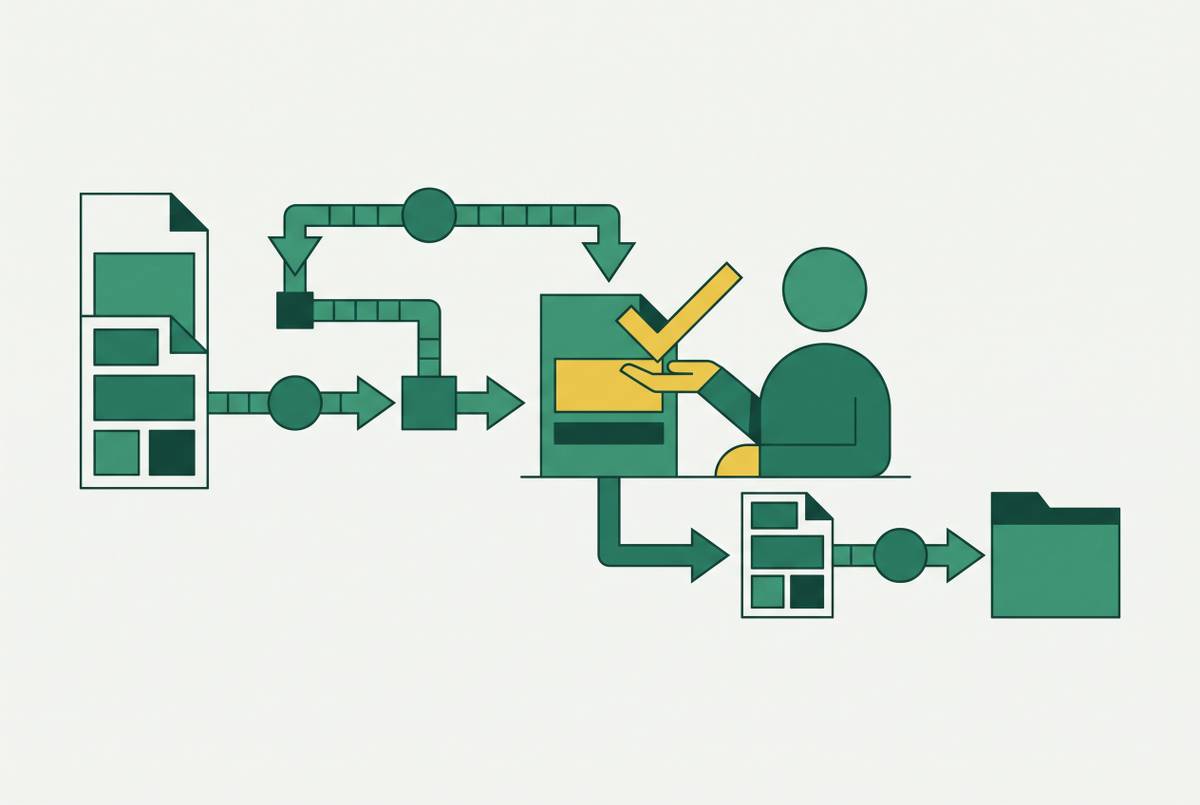
Intelligent document processing does three things, in a fixed sequence. It classifies an incoming document to figure out what kind of thing it's looking at, an invoice versus a bill of lading versus a claims form. It locates and extracts the fields that matter from that document type. Then it validates what it extracted against business rules before handing structured output downstream.
That sequence matters because it clarifies what IDP is not. OCR converts characters, full stop. It has no concept of what an "invoice total" is or where it should sit relative to a line-item table. IDP is the classification, extraction, and validation layer built on top of that character conversion, and conflating the two is where a lot of vendor confusion starts.
Traditional IDP does its best work in a specific, fairly narrow lane: high-volume document types that are structurally consistent, where the fields to extract are known in advance, validation rules are already defined, and the downstream system just needs structured data delivered through a standard integration. Accounts payable invoices from a stable vendor list. Standardized claims forms. Anywhere the shape of the document doesn't change much and the rules for what "correct" looks like are already written down.
What agentic AI adds to the document stack
Gartner has warned about "agentwashing," the practice of slapping the word "agentic" on a system that just calls an LLM once and returns an answer. The meaningful test is whether the system can genuinely act with autonomy, not merely execute a scripted sequence.
Real agentic document systems add capability that sits above extraction. They reason across a set of related documents instead of processing one file in isolation. They adapt to a document type they've never seen without someone reconfiguring a template first. They weigh whether a discrepancy needs escalating to a person or is minor enough to resolve on its own. And they can orchestrate a multi-step workflow, extraction, validation, exception handling, posting to an ERP, inside a single reasoning loop rather than stitching together separate scripted stages.
None of that works if the data feeding it is bad. Agents reason and act based on the data they're given, and if that data is incomplete or wrong, an agent can be extremely confident about the wrong answer. Confidence is not the same thing as correctness, and agentic systems have no built-in mechanism to tell the difference when the input itself is corrupted upstream.
The broader industry shift is toward handling unstructured documents at scale and building end-to-end automation workflows around the structured output that extraction produces. IDP is the prerequisite for that vision.
The touchless rate gap: what it reveals about where each technology operates
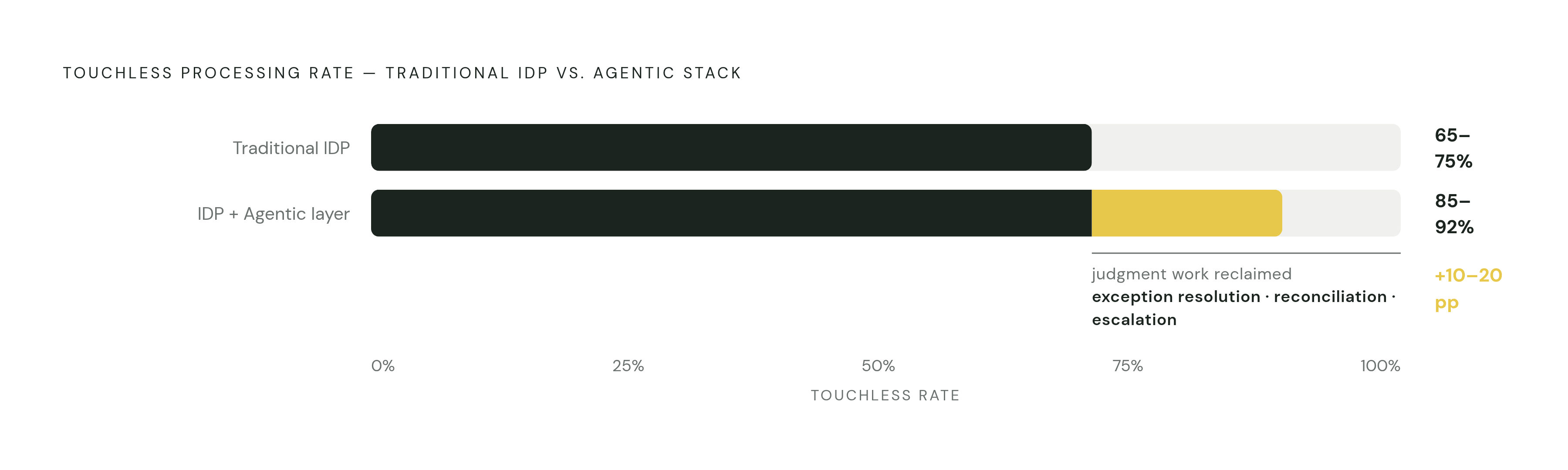
In production settings, traditional IDP tends to land touchless processing rates, meaning documents that complete a workflow with zero human intervention, somewhere around 65 to 75%. In production settings, traditional IDP tends to land touchless processing rates, meaning documents that complete a workflow with zero human intervention, somewhere around 65 to 75%. Adding an agentic layer on top raises that number to 85 to 92%. That gap deserves interrogation.
Touchless rate doesn't only measure whether a field got extracted correctly. It measures whether the entire workflow finished end to end: matching a document against a purchase order, coding it correctly, resolving any exception that popped up, posting it to the ERP, all without a human touching it. Extraction accuracy is one input to that number. It's not the whole number.
The 65 to 75% range for traditional IDP isn't a mark of failure. IDP was built to hand off clean, structured data and stop there. The remaining 25 to 35% that needs a human is largely judgment work: deciding whether an exception matters, reconciling a fact across two documents that don't quite agree, escalating a discrepancy that a rules engine can't classify. That's judgment, not extraction, and it's exactly the layer agentic systems are built to absorb.
So the gap lives at the workflow level. Agentic systems extend how far automation reaches into a process. They don't replace the extraction engine sitting underneath them, and treating the touchless rate jump as proof that extraction no longer matters gets the architecture backwards.
Why the extraction layer cannot afford to be wrong
Garbage in, garbage out isn't a new principle, but it gets dangerously easy to forget once an agent is doing the reasoning. Organizations pour money into agent frameworks and retrieval pipelines while treating the data quality layer feeding those pipelines as an afterthought. Document parsing is the bottleneck nobody budgets for, because it works fine in the demo and breaks in production.
The failures here are often silent, which is what makes them expensive. A vendor shifts the column positions on an invoice template by a few pixels, a field drops before it ever reaches the approval engine, and the agent downstream has no way of knowing the input it received was incomplete. It reasons confidently over a partial picture and never flags a problem, because from its vantage point, nothing looks wrong.
Consider a 10-K Exhibit Index that gets interrupted mid-row by a page break, a routine event in any long filing. A parser that loses row alignment across that break produces output that looks structurally fine, rows, columns, values all present, but is semantically wrong: the values no longer correspond to the labels they sit next to. An agent reasoning over that table has no way to detect the error, because the output passed every check a parser would run on it.
The spread in extraction quality across the industry is not a marketing distinction dressed up to justify a price difference. A 2026 benchmark run across mixed document types found legacy OCR scoring 34.4%, while neural vision-language models reached 73 to 77%, a difference far larger than a rounding error. That's the line between a system that can support an agentic workflow and one that will quietly poison it.
Evaluating extraction quality before committing it to an agentic pipeline
Vendor accuracy claims deserve real skepticism, because accuracy on a clean sample set tells you almost nothing about accuracy on a scanned, coffee-stained, hand-annotated form from an actual production queue. Handwriting, scan quality, and layout complexity are where accuracy claims go to die. Any evaluation has to run on real production documents, edge cases included, or it isn't measuring anything useful.
Aggregate accuracy hides more than it reveals. A study of LLM-based extraction across 200 NOAA documents found overall field-level accuracy of 94.72%, a number that looks solid on its own. But individual field accuracy in that same study ranged from 87.94% to 100%. The average flatters the system; the range tells you where it actually breaks.
Confidence scoring matters as an operational mechanism. Each extracted field gets a confidence score reflecting how reliable that particular extraction is. High-confidence fields flow straight through to whatever system consumes them next. Low-confidence fields route to a human review queue before they ever touch a business workflow. Setting the threshold is a precision-recall trade-off: a higher threshold sends more uncertain documents to manual review, trading some automation for a lower error rate. There's no universally correct number here, only a trade-off a team has to choose deliberately.
Field-level confidence doesn't vary randomly, either. In practice, per-field confidence scores vary considerably within a single document type. The hardest fields to extract reliably tend to be the ones with the most format variation and the least visual consistency, and that pattern is predictable enough to plan around.
The production failure modes that IDP and agentic layers each own
Some failures belong squarely to extraction. Coordinate-dependent extraction breaks the moment a layout shifts even slightly. Multi-column layouts get read out of order. Table rows lose alignment the instant a page break interrupts them. Scanned documents with no underlying text layer come back as empty strings, silently. Templates drift when a vendor redesigns a form, and that maintenance burden compounds fast as the number of document types a system handles grows. Worst of all, these failures are often silent: a field drops, and nothing upstream sends an error to the layer reasoning above it.
Other failures belong to the agentic layer. Deciding whether a discrepancy is significant enough to escalate to a human is a judgment call, and getting that threshold wrong either buries a real problem or floods a review queue with noise. Cross-document reconciliation is another: failing to flag that a bank statement total doesn't match the tax return sitting in the same loan file is an agentic failure, not an extraction failure, because both documents were probably extracted correctly on their own. And there's a newer, more mechanical failure mode: agent framework adoption nearly doubled, from roughly 9% to almost 18% of organizations between early 2025 and early 2026, and infrastructure pressure has emerged as a notable production challenge as agent call volume climbs.
Some failures span both layers at once. A model can lead every public benchmark and still fail silently on a domain-specific layout it was never tested against, because benchmark rank doesn't guarantee production fidelity on documents the benchmark never included. And "supports" is not the same claim as "works well enough for production": a Document AI tool that handles rotated pages and merged-cell tables gracefully in a demo can degrade sharply on the messier version of that same document type once it's running at volume.
None of this is a case against any particular vendor. It's a diagnostic map. Knowing which layer owns a given failure is what tells an engineering team where to actually spend its time, instead of throwing agentic tooling at a problem that extraction created.
When traditional IDP or agentic processing is the right choice
Traditional IDP earns its keep when the document types are known quantities, volume is high, and the layouts are stable enough that template drift stays manageable rather than becoming a full-time job. It's the right call when validation rules are already defined and the downstream system just needs structured data through a standard integration, no reasoning required. A touchless rate in the 60 to 75% range is often perfectly acceptable when the remaining exceptions already flow into an existing human review queue that isn't overwhelmed. And in regulated environments, auditors frequently want traceable, field-level evidence rather than an agent's reasoning chain, which favors the simpler, more inspectable architecture.
Agentic processing earns its added cost under different conditions. Document variety that's high and growing, new vendors, new form versions, new document types showing up without warning, is exactly the scenario where static templates fall apart and reasoning-based adaptation pays for itself. It earns its cost when the workflow has real judgment steps built in beyond extraction: exception resolution, cross-document reconciliation, decisions about how something gets posted. And it earns its cost when the target touchless rate is 85 to 92% and current performance falls meaningfully short of that target, and when a team simply can't absorb days or weeks of manual configuration every time a new document type shows up.
Whether to build or buy is a question raised by all of this. Open-source pipelines handle clean, text-layer PDFs with predictable layouts reasonably well. They degrade fast on scanned documents, multi-column layouts, and tables that break across pages, and the maintenance cost of chasing those edge cases tends to compound faster than most teams budget for going in.
Banking, financial services, and insurance lead IDP adoption for a reason: the segment is expected to account for a large share of IDP market activity. Loan files, KYC forms, insurance claims, and financial statements combine everything that makes the layered architecture worth the investment, high volume, regulatory traceability requirements, and documents that have to be reconciled against each other rather than processed one at a time.
What the combined stack requires from each layer in production
The extraction layer owes the agentic layer above it a specific set of guarantees. It needs to hold up its accuracy across the full range of real-world document variability, formats, scan quality, handwriting, table structures, including the messy cases beyond the clean samples a demo gets built around. It needs to produce structured output with field-level traceability back to the source document, so a claim can actually be audited later. A confidence score should actually mean what it claims to mean, not just look reassuring, since the agent is going to route decisions based on that number. And it needs lifecycle controls: versioning, rollback, a change history, so that a routine model update doesn't quietly degrade what the agent is working with above it.
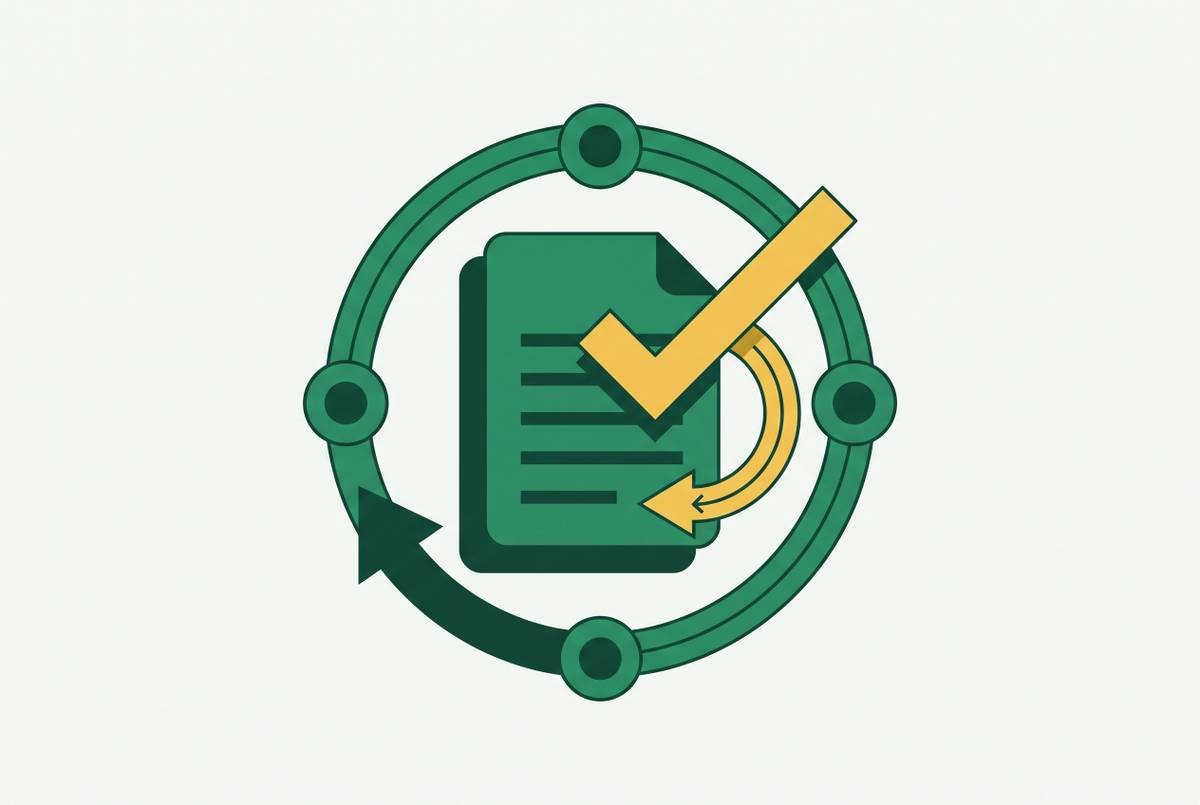
The agentic layer, in turn, owes something back to extraction: correction signals that feed continuous improvement. That feedback loop, agentic processing learning from its own downstream outcomes and pushing that signal back into how documents get extracted, is the meaningful difference between a system that's genuinely agentic and a static OCR pipeline that never gets better on its own. Neither layer works in isolation. The stack only holds together when each side keeps its half of that bargain.
Sources
- How AI agents and LLMs are evolving intelligent document processing | UiPath
- Why agentic AI document processing is the future of IDP
- Best Intelligent Document Processing Solutions (Transitioning to Intelligent Document Processing) Reviews 2026 | Gartner Peer Insights
- Intelligent Document Processing in 2026: The Complete Enterprise Guide to Document AI and IDP Solutions - Korea Deep Learning
- parseur.com
- parseur.com
- idp-software.com