Cloud-Neutral Document Processing Platforms Ranked by Portability and Production Accountability
Evaluate document platforms by portability and accuracy separately, not together.
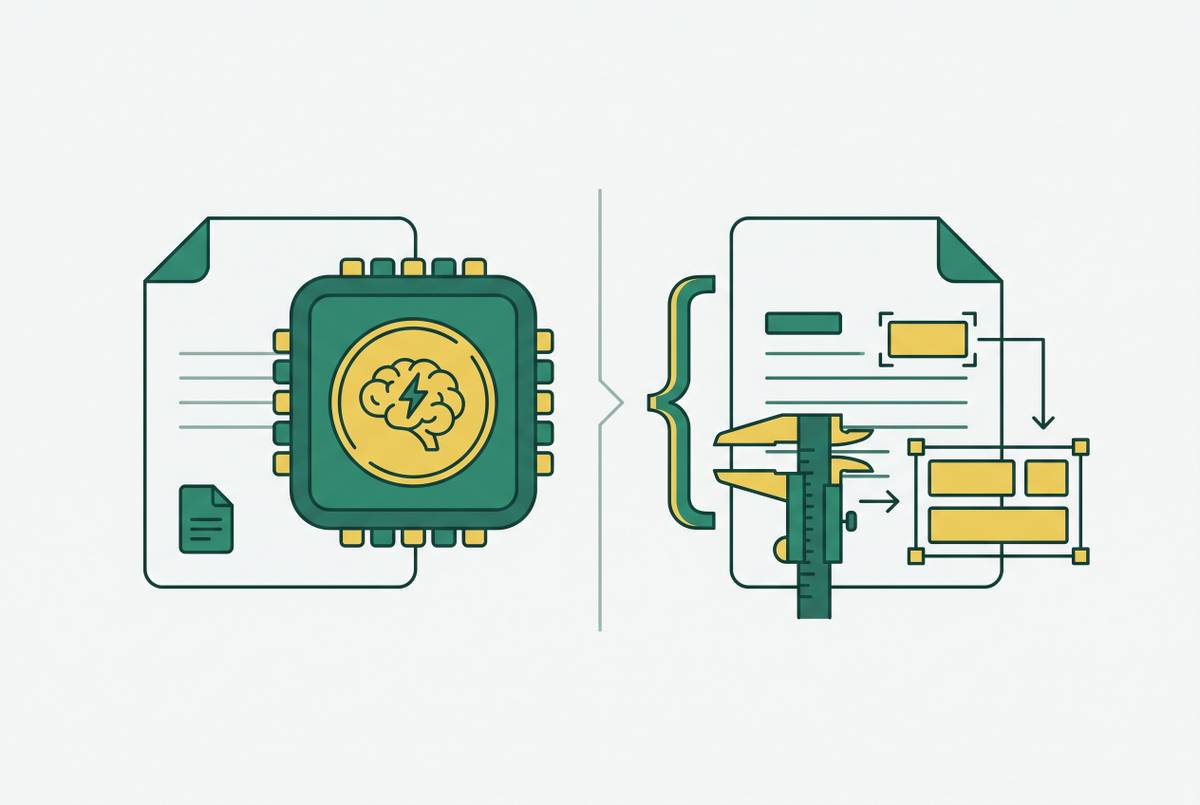
For high-volume production pipelines, alternatives to Google Document AI and Azure Document Intelligence should be ranked by how they fare in two separate tests, one for portability and one for production accountability. API-first platforms belong first on the shortlist only when they prove cloud-independent operation and contractually own field-level accuracy. Workflow-first suites suit operations-heavy teams, while cloud-native APIs suit teams that accept cloud dependence. Deployment freedom alone does not transfer the risk of wrong answers.
Why portability and production accountability are different engineering requirements
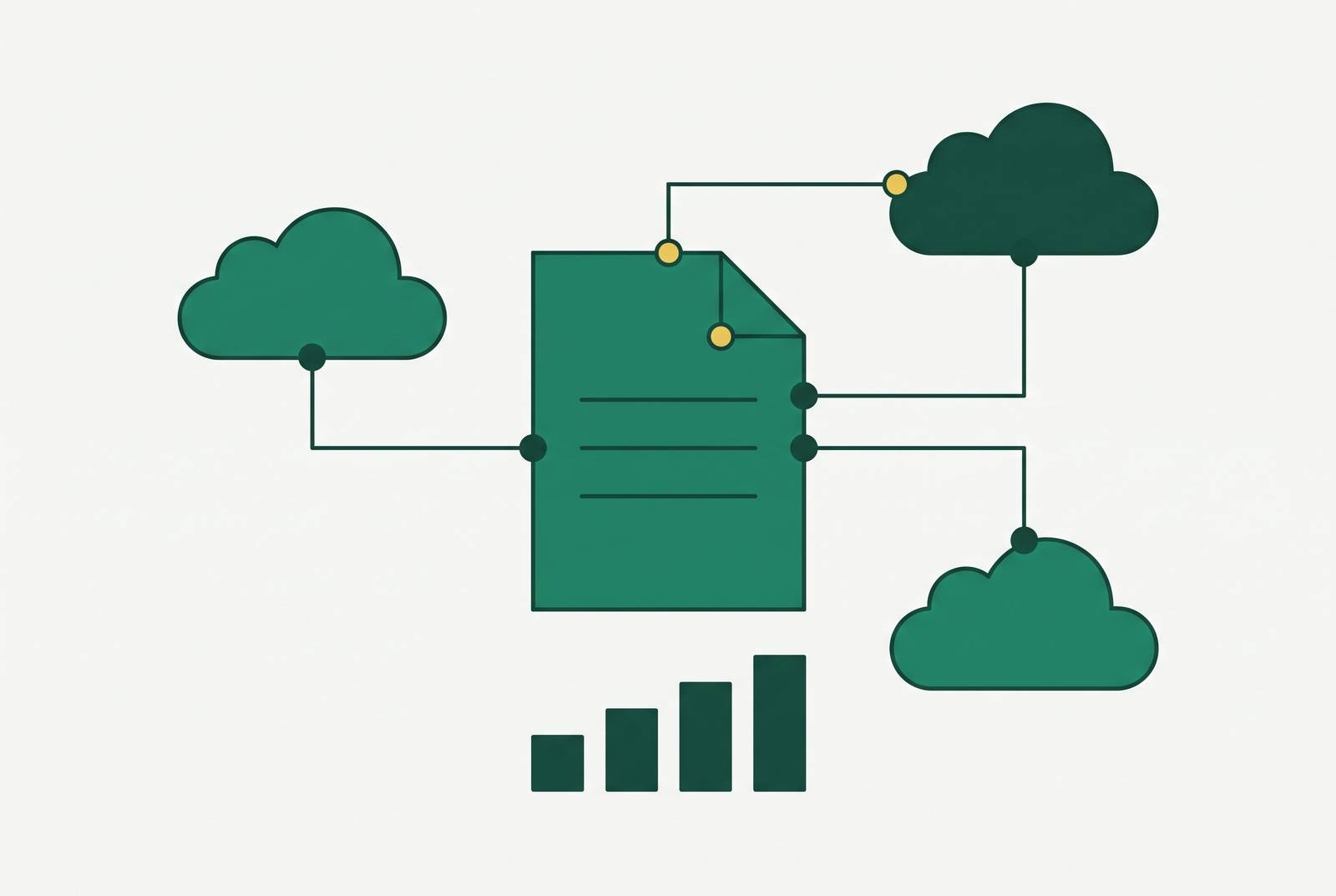
Portability is an infrastructure property. It asks whether the extraction pipeline can run on AWS Fargate, Google Cloud Run, Azure Container Instances, an on-premise Kubernetes cluster, or a combination without cloud-specific bindings. A container is only part of that answer. Moving the container also moves the working pipeline only if the services it needs for orchestration, identity, billing, and inference can move with it.
Production accountability is a contractual and operational property. It asks whether the vendor commits to correct field-level results and provides evidence that can survive a compliance audit. These requirements are independent of each other. A platform can run anywhere while leaving every extraction error to the customer, or depend on one cloud while offering a tight per-field guarantee. Procurement therefore needs two separate judgments.
How portability actually breaks in production: the gap between configuration and runtime behavior
A configuration review establishes what a deployment appears to support. It does not establish how that deployment behaves under load. The January 2026 study Evaluating Multi-Cloud Portability and Elastic Scaling Across Serverless-Container Platforms finds high execution reliability despite limited feature compatibility, showing that documented support and runtime behavior can diverge. A mismatch on paper need not prevent execution, while configuration approval is not enough to establish reliable operation.
For document pipelines, the practical test involves real volume and real document variance. The test needs to cover scan quality, layout, and page count because a container that starts successfully says little about how extraction and exception-handling work. A locally running container may still require a connection to its originating cloud for usage reporting or billing, leaving the processing environment dependent on a service elsewhere.
For true portability, the pipeline must behave the same way in fully managed cloud, self-hosted container, and disconnected on-premise modes. A platform that supports the first two has not thereby proved the third. The test must show whether extraction and exception routing both work in the environments the team needs, including under concurrency and cold-start conditions.
How production accountability breaks in practice: the difference between uptime SLAs and accuracy SLAs
An uptime SLA promises that the service will answer. It does not promise that the answer is correct. A wrong extracted value delivered on time can cause the same downstream damage as a timeout, yet standard availability and response-time commitments leave that accuracy risk with the customer. A headline benchmark describes measured performance on a document set.
An accuracy commitment needs ground truth for each field to have real backing. The evidence that backs it includes calibrated confidence scores that can be traced to source pixels, arithmetic cross-field validation, and an audit trail that records what happened to the extracted data. Confidence alone is not a contractual remedy. Nor does a record of API calls establish why a particular value was accepted and used in a downstream decision.
The European Commission’s AI Act Service Desk states that Article 50 transparency obligations become enforceable from 2 August 2026. Article 11 covers a separate set of rules for technical documentation for high-risk systems. For agentic document systems that fall under these rules, compliance takes more than an accuracy percentage. An accuracy SLA and an audit trail answer different questions, and neither substitutes for assessing the applicable obligations.
Why edge cases, not clean-document benchmarks, are where both criteria get tested
A merged-cell table can produce a complete-looking output with the wrong values. One shifted cell is enough to break the association between a header and its data, while a table split across pages can break extraction logic altogether. These are silent errors. Handwritten signatures overlapping typed text, embedded charts treated as images rather than data, and languages absent from training add further ways for a successful request to produce an unusable result.
Template and regex pipelines have their own brittle points. An invoice update can move a label from the same line as its value to the line above, silently breaking the pattern match. A scan that is rotated slightly can throw off pixel-based positions that worked on the digital PDF. A change in resolution or feed errors can cause similar trouble. The document may remain readable to a person while no longer matching the parser’s assumptions.
Unreadable input, unsupported format, incomplete schema output, low-confidence fields, failed grounding, and business-rule mismatches need distinct handling so the downstream application can retry, reject, or route for review. That behavior must survive a deployment change. If concurrency or cold starts change how exception routing works in another environment, portability and accountability fail together. Clean benchmark documents are the wrong test because they leave these failure paths largely unexamined.
The evaluation criteria that portability and accountability actually require
For a practical evaluation, the checklist needs two separate tracks. Portability starts with identical behavior across managed cloud, self-hosted containers, and disconnected on-premise deployment. The next checks concern cloud-specific orchestration, billing, and identity bindings, followed by runtime testing under live document load. Residency needs its own check as well. Separate EU and US deployment regions must come with a clear commitment that data will not cross jurisdictions where that restriction is required.
Accountability starts with a per-field accuracy commitment that is measured against ground truth that has been defined. The next checks concern calibrated confidence, source-pixel traceability, and arithmetic validation across related fields. A confidence threshold is not enough by itself. Even at a 0.95 threshold, confident mistakes remain possible, so the evaluation must distinguish a plausible score from evidence that the extracted value is supported by the document.
The audit export must show what was extracted and what was done with it in a machine-readable, citeable form. Retention terms need equally direct scrutiny. Zero data retention may be the default or an enterprise add-on, and that difference changes the compliance exposure of financial, healthcare, and legal workflows. Pricing also shows who pays when processing fails, especially whether the vendor charges only for pages it processes correctly or charges however the processing turns out.
Which alternatives to Google Document AI and Azure Document Intelligence fit production pipelines
For teams requiring both cloud independence and contractual accuracy, API-first platforms are the first category to evaluate, but only conditionally. This tier belongs first when it has the deployment modes, field-level guarantees, audit exports, and retention terms described above. Its strongest fit is engineering teams building regulated document workflows in accounts payable, mortgage lending, insurance, healthcare, and payroll.
Workflow-first IDP platforms rank next for that particular requirement, with moderate portability and contract-dependent accountability. Managed SaaS and private-cloud options can offer deployment choice, while deep ERP and RPA connectors create operational dependencies that may be harder to migrate than an API integration. Their strength is the downstream work. Classification, routing, three-way matching, claims adjudication, and mortgage QC can be as important as extraction for operations-heavy enterprises handling mixed document types.
That workflow depth can justify moving this category to the top of an operations-led shortlist. Audit-ready decisioning offers an advantage over extraction alone, although accuracy SLAs vary widely and are often unpublished. Continuous learning is another meaningful distinction. A platform that improves from corrections differs from a static OCR tool as document variance grows, but that capability still needs to be assessed separately from its contractual promise. For financial, healthcare, and legal workloads, the security floor includes SOC 2 Type II, GDPR, ISO 27001, and contractually available zero data retention, which may require enterprise-tier approval.
Cloud-native managed APIs, including Google Document AI and Azure Document Intelligence, rank behind those alternatives when the team must be able to leave a cloud provider. Their orchestration, billing, and often inference layers are cloud-specific. Microsoft’s documentation states that connected containers run locally and send usage information to the cloud for billing, illustrating why a container option is not the same as disconnected operation.
These APIs remain a reasonable fit for teams committed to one provider, with lower compliance exposure and a need for broad document coverage without custom accuracy guarantees. Their standard availability commitments should not be mistaken for per-field accountability. For a team replacing Azure Document Intelligence because costs are unpredictable and accuracy varies, changing the endpoint alone does not resolve either problem. The replacement must be compared on deployment location, its billing treatment of failed processing, and its remedy for incorrect fields.
What the build-vs-buy decision looks like when portability and accountability are the actual criteria
For a pipeline built in-house, portability can be easier to achieve than production accountability. Strong extraction on clean documents is feasible, but high-variability inputs demand sustained iteration, explainable AI tooling, and specialized research and development. The model is only the starting point. Retraining, integration pipelines, exception handling, audit trails, and engineering maintenance recur throughout the system’s life. Most in-house IDP projects take 6 to 18 months to reach production maturity.
Building also leaves the organization responsible for accuracy outcomes. It can create internal controls, but it does not create a vendor’s contractual backstop. Buying has a serious weakness of its own, however. If the audit trail stays locked inside the platform, the customer loses independent access to the evidence a compliance auditor may need. That is a reason to demand an exportable, field-level, citeable trail, rather than a reason to rebuild the entire extraction stack.
The practical recommendation is to buy the data, models, and accuracy guarantee while building the thin integration layer that belongs to the business. That layer has business-rule validation, the reviewer interface, and connections to downstream systems. Audit evidence should remain an owned output. In mortgage, healthcare, and insurance workflows, residency and zero-retention architecture can add to the case for buying when they lower the compliance risk that comes with third parties. Reframed around these requirements rather than feature completeness, the decision almost always becomes to buy the accountability and control the integration layer.
Applying the two-axis framework to a real platform evaluation
The next step is a vendor conversation backed by a runtime test. The portability discussion should begin with the on-premise architecture diagram and establish whether outbound connectivity is required after initial licensing. It should then cover what changes when the pipeline moves from the managed service to the team’s Kubernetes cluster. Residency belongs in both the contract and the diagram. An EU-only requirement needs an explicit guarantee that data does not cross regions.
The accountability discussion should establish the per-field SLA, how ground truth is defined and measured, and the contractual remedy for a wrong value returned with high confidence. The vendor should also provide an audit export that can be assessed for field-level detail, machine readability, and source-pixel citations. Retention terms deserve a direct answer too. A separate contract addendum is not the same as zero retention by default, even if both appear under the same security heading.
The runtime test should use the documents that expose failure paths, including rotated scans, merged cells, cross-page tables, and incomplete outputs. The test should compare how extraction and exceptions behave in the environments the team plans to use, as well as show that deployment succeeds. Missing answers leave a requirement unproven. A feature page cannot establish runtime independence, and a benchmark cannot establish who pays for an accuracy failure.
Two questions, asked in order, resolve most evaluations. Can the pipeline run where the team needs it to run. Will the vendor own the outcome when it is wrong. Neither is optional in a production document workflow.